



2024 brought a slowdown in the mergers and acquisitions (M&A) market in Central and Eastern Europe, but Poland, the Czech Republic, Hungary and Romania remain active players. An analysis of Mergermarket data shows how deal activity developed in these countries.
Total number of deals, 2021-2024
Over the last 4 years, Poland led the way in the number of acquisitions with 1,485 deals, which shows the strength and maturity of the local market. It was followed by the Czech Republic (644), Romania (523) and Hungary (454).
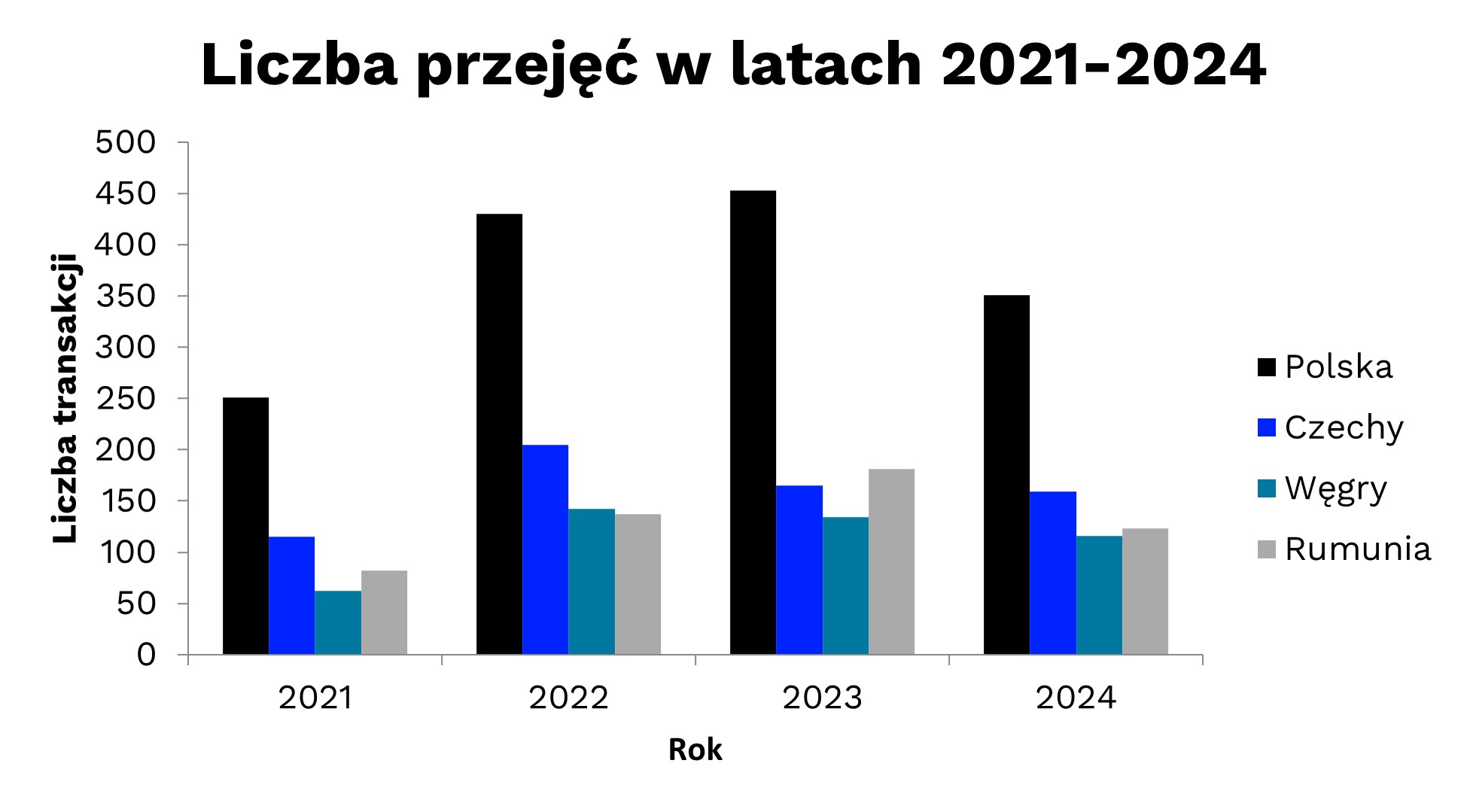
Key takeaways from the whole period
- Poland in the lead - the highest total number of acquisitions, both domestic and international.
- Strong foreign expansion by the Czech Republic - Czech companies acquired more foreign businesses than Polish companies did.
- Lower activity in Hungary and Romania - fewer deals, especially acquisitions of foreign companies.
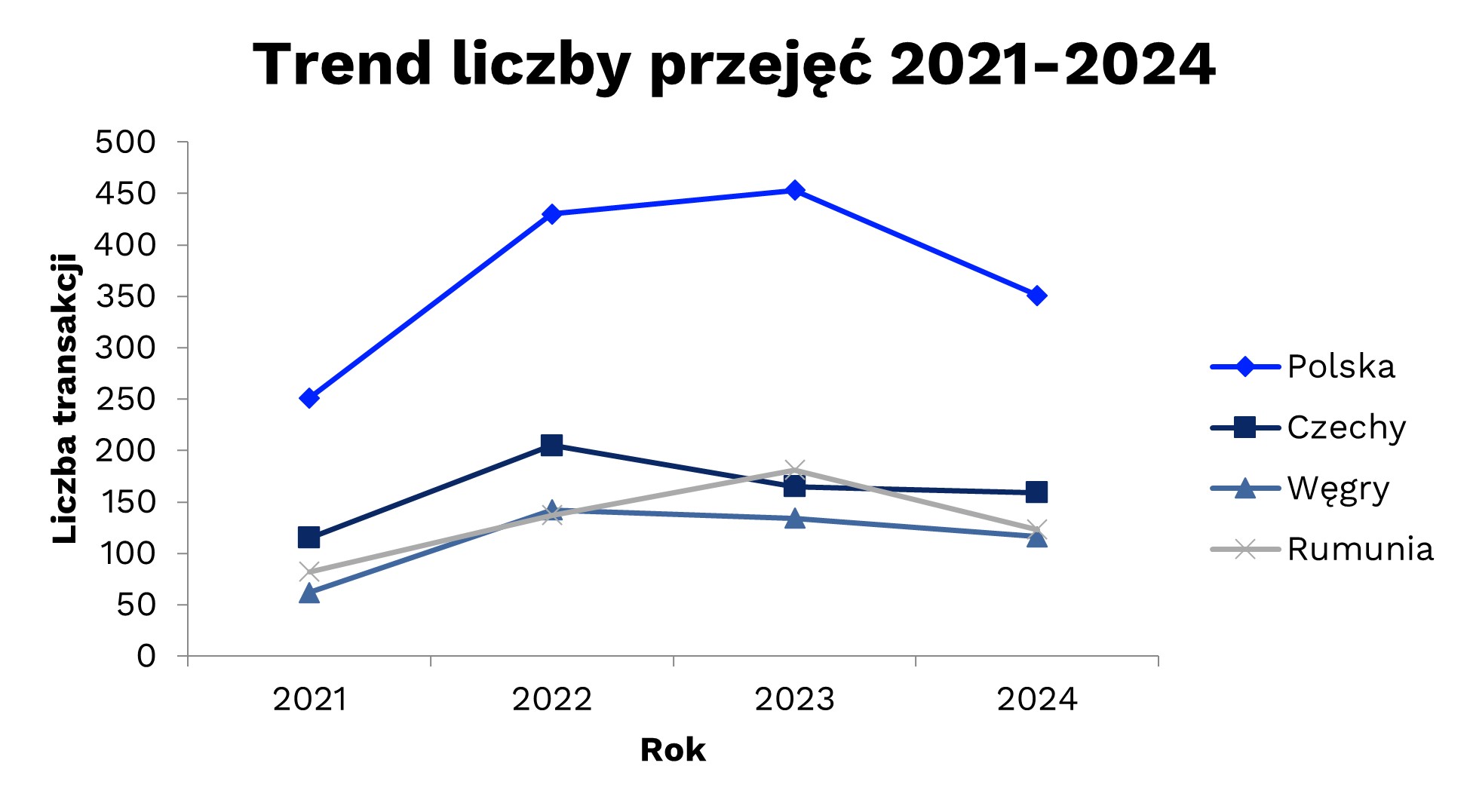

What happened in 2024?
In 2024, the number of deals fell in all the countries analysed.
- Poland - 351 deals (the most in the region).
- Czech Republic - 159 acquisitions, a stable level compared with 2023.
- Romania - 123 deals, down on a very active 2023.
- Hungary - 116 acquisitions, a steady level year on year.
Notably, domestic acquisitions dominated in Poland (149), but there were still 151 acquisitions of Polish companies by foreign entities, which confirms strong foreign investor interest in the Polish market.
Summary
Each country in the region has its own characteristics. Poland stands out for the scale and number of its deals, the Czech Republic for its activity in foreign markets, and Hungary and Romania for a stable level of M&A.
Poland has been the M&A leader in Central and Eastern Europe for years, but compared with the largest markets in Western Europe, the number of deals still has considerable room to grow. In countries such as Germany, France and the UK, for example, the annual number of deals in each market exceeds 1,000-2,000. The Polish economy is growing fast and local companies are increasingly taking part in consolidation, but market size, access to capital and international expansion remain barriers that still need to be overcome. Another important factor is the need for companies to professionalise their M&A strategies, and the right advisors can help with this.
Methodology and data source
The data comes from Mergermarket and covers only transactions completed in a given year (marked as “completed” in Mergermarket). In addition, only companies wholly owned by domestic capital of the given country were included (“dominant country” in Mergermarket).
*In this analysis, CEE (Central and Eastern Europe) covers Bulgaria, Croatia, the Czech Republic, Estonia, Lithuania, Latvia, Poland, Romania, Slovakia, Slovenia and Hungary.



