
In the second quarter of last year, the average number of cyberattacks per organisation in Europe - the most frequently attacked region in the world, according to IBM [1] - reached as many as 1,013 [2]. In Poland, the figure was 1,108, an increase of 33% on the previous quarter [3]. Poland’s current cyber threat index stands at 36.7%, which is 1.7 percentage points higher than a year earlier and as much as 16.5 percentage points higher than Ukraine’s. This may be a good time to consider whether your company is exposed to cyber risks during its digital transformation.
Especially now, as the war in Ukraine heightens regional tensions, Polish companies find themselves on the front line of the digital battlefield, exposed to politically motivated attacks and espionage. In the face of these challenges, digital transformation should be closely tied to robust cybersecurity strategies, ensuring not only innovation but also security and resilience to threats.
For companies on the path of digital transformation, a key step should therefore be to integrate cybersecurity into their strategic digital initiatives. This means not only deploying the latest defensive technologies but also putting in place continuous threat monitoring, adapting security strategies and promoting a culture of cybersecurity awareness at every level of the organisation. By strengthening their defences while developing digital innovation, companies can manage cyber risk effectively, which is essential for success in a fast-changing digital environment and for business continuity in the new digital era.
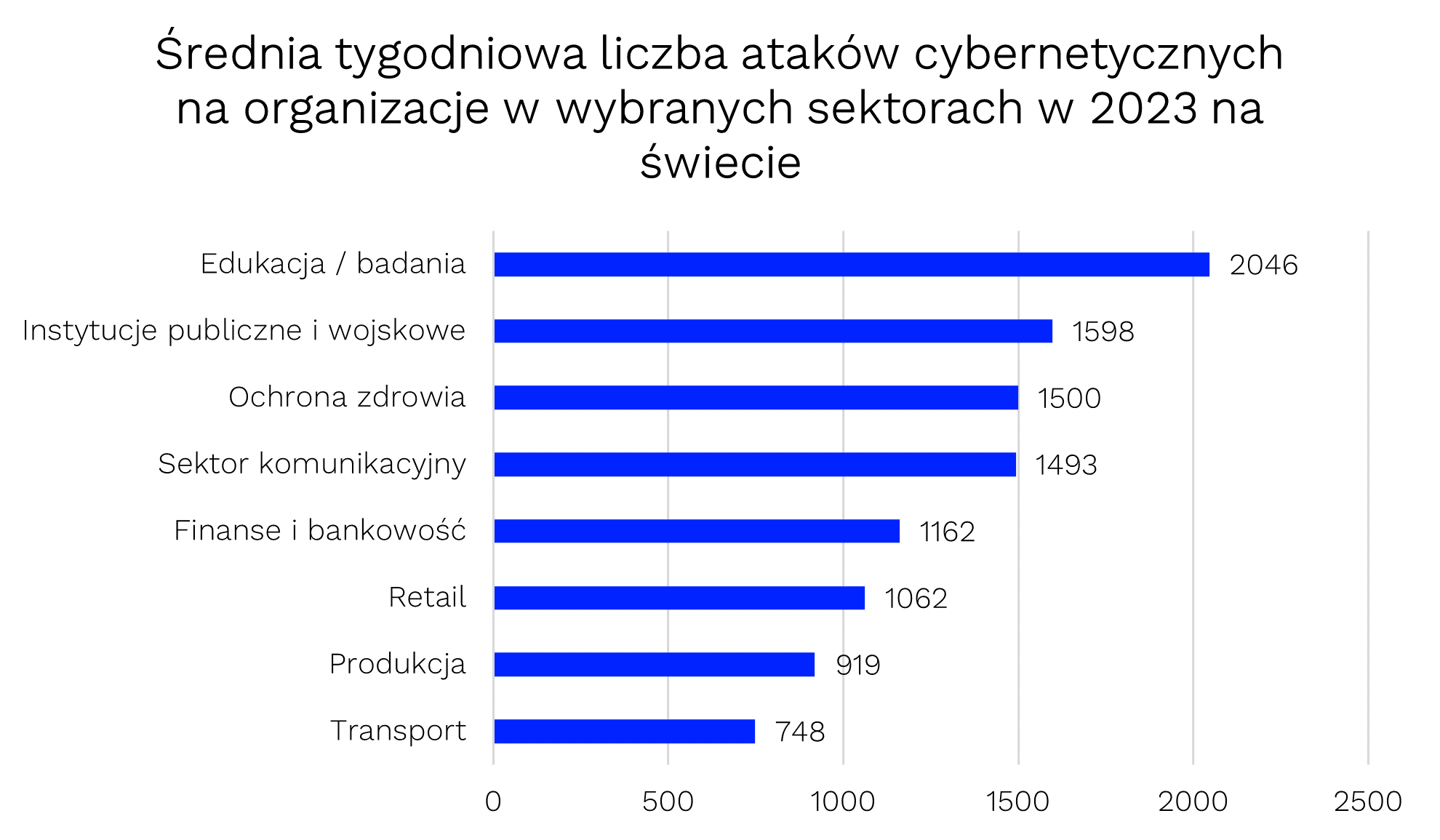
Source: 2024 Cybersecurity Report, Checkpoint Global
The need for a strategic approach
In the fast-moving world of technology, companies should take a strategic approach to digital protection, both to protect their assets against cyber threats and to allow innovation to be introduced safely. The first step is to build cybersecurity into every technology project at an early stage, so that security is taken into account in business processes from the very start. The next step is to develop security awareness and a security culture among employees at all levels of the organisation, including through regular training and awareness campaigns. In addition, companies must continuously assess risks and the adequacy of the protective measures in place, adapting them to the evolving threat landscape.
A strategic approach also requires building relationships with external partners such as technology providers, regulators and other players in the cybersecurity ecosystem, which makes it possible to share knowledge and best practice. This collaboration is key to defending effectively against global threats and allows knowledge and practices to be shared on an ongoing basis. Ultimately, effective digital protection in the age of innovation requires organisations to strike a constant balance between introducing new technologies and ensuring security, which is essential for lasting success and growth in the digital world.
Given the challenges of companies’ digital transformation, a strategy to make digital transformation both innovative and secure should focus on four key areas:
Technology integration and innovation
- Selecting and deploying new technologies that support business goals while ensuring security and regulatory compliance.
- Optimising business processes through automation and advanced technologies such as AI and machine learning to improve operational efficiency and reduce the risk of human error.
- Building flexible IT infrastructure that can adapt quickly to changing business needs and cyber threats.
Cybersecurity and infrastructure protection
- Regularly updating and patching systems and applications to protect against new variants of spyware and malware.
- Deploying solutions for continuous monitoring of networks and systems to detect suspicious activity early.
- Building resilience to incidents through advanced threat detection and response systems.
- Creating a full incident response plan that sets out the procedures to follow in the event of a security breach.
Change management and organisational culture
- Developing security awareness and a security culture among employees at all levels of the organisation.
- Cybersecurity training and workshops so that employees can recognise potential threats and respond to them effectively.
- Promoting a culture of innovation that balances exploring new technologies with assessing potential cyber risks.
Data and privacy management
- Protecting data against unauthorised access, loss or theft.
- Introducing robust data management solutions that ensure data integrity, availability and confidentiality.
- Ensuring compliance with local and international data protection regulations such as the GDPR.
- Putting in place a data classification strategy to distinguish sensitive from ordinary information and adjust the level of protection accordingly.
According to the Cisco Cybersecurity Readiness Index, only 15% of organisations worldwide are considered to have a mature level of readiness to deal with cybersecurity threats in a hybrid world [4]. The remaining 85% are exposed to a wide range of risks, including cyberattacks, data breaches, loss of confidentiality and potential business disruption, because they are not sufficiently prepared to ensure security in a hybrid environment. According to IBM Security, the average cost of a successful cyberattack to its victim worldwide was as high as USD 4.35 million in 2023 [5].
Can you be sure your company is among those 15%?
If not, JP Weber Transformation Advisory will help your organisation develop the right strategy and put in place solutions that prevent external attacks. Contact us and let us be your technology guide, taking you through your organisation’s digital transformation without exposing it to unnecessary risk.
[1] IBM X-Force Threat Intelligence Index 2024, IBM, 2024.
[2] 2024 Cybersecurity Report, Checkpoint Global, 2024
[3] 2024 Cybersecurity Report, Checkpoint Global, 2024
[4] Cisco Cybersecurity Readiness Index, Resilience in a Hybrid World, March 2023.
[5] Cost of a Data Breach Report 2023, IBM, 2023.