



Data science (known in Polish as “danologia”) is a term that appears more and more often in industry articles and in talks at all kinds of conferences. Many people see it as something new, yet the origins of data science can be traced back to the 1980s. It was defined in 1998 as a new interdisciplinary field covering three key aspects: creating data, collecting data and analysing it.
Data science - a definition
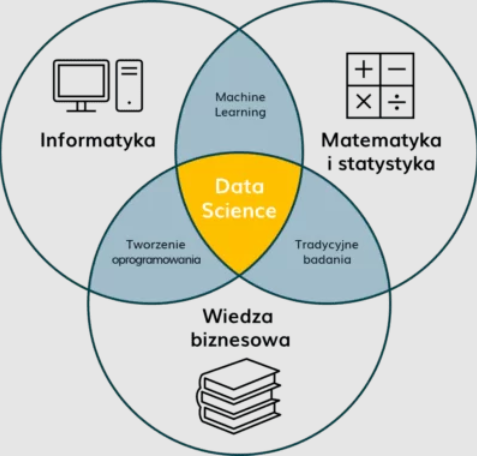
In simple terms, data science is a field of study that involves drawing conclusions from large amounts of data using various research methods, algorithms and processes. It helps extract hidden, sometimes surprising insights from structured and unstructured data sets. The term “data science” - literally the science of data - arose mainly from the field’s very close links with science, particularly statistics, econometrics and mathematics.
Once the concept of data science is no longer unfamiliar, its link with innovation seems obvious. But the key question is whether that is really the case.
Many researchers, including those at the Wharton School, point out that where classic data analysis methods and “data mining” fail, more advanced data science methods (such as machine learning and NLP) make it possible to find “hidden patterns” that could not otherwise be observed. It is the proper use of these hidden patterns and non-obvious insights that allows many companies to build a lasting competitive advantage. The growing importance and use of such digital tools that we are seeing today is what we call digital transformation.
Data science in innovation
Below, we have gathered five areas in which data science creates real business value by increasing efficiency or reducing errors.
1. Greater customer engagement
Until recently, customer engagement was measured indirectly, for example by counting the coupons redeemed in a given sales channel or by reviewing sales reports broken down by region and city. In many companies, the process still looks much the same today. Data science opens up a range of new possibilities, including the analysis of unstructured text data. This means that every mention of the company or visit to its website can be recorded and analysed to determine where a prospective customer is in the sales funnel. In addition, advanced algorithms make it possible to manage sales activities in a way that increases customer engagement in the areas that matter most to your business (for example, acquiring customers at the top of the sales funnel, increasing the number of comments and reviews, or boosting sales of specific products).
2. Better decision-making
One way to deal with the risk and difficulty of making key decisions is to back them with solid analysis. Data science allows business analysts to build decision models that show variables such as the risk of project failure, the estimated budget, or the increase in revenue or savings the company can expect. These models are often based on historical data on the organisation’s projects, but also on external sources of market and economic data, for example. Business analytics in innovation is the real future of business.
As you might expect, the main obstacle to such solutions is the need to have data on the projects carried out. The process of collecting, harmonising and cleaning the data is also time-consuming, and the return on investment may not be visible straight away.
The advantage of such solutions is that they keep knowledge within the company (models based on employees’ knowledge captured, for example, in project documentation) and base decisions not only on the team’s intuition and experience but also on hard numbers and results.
3. Product development and brand building
By using data science in the form of sentiment analysis and natural language processing (NLP), a company can easily gauge how its target groups feel about specific products, entire product categories or - at a more detailed level - the features that describe a given product. This allows the company to determine, even before launching a product, which features to emphasise in a given market and whether launching the product in that market makes sense at all. In addition, knowing how satisfied customers are and how familiar they are with the brand, and linking this data to specific emotions, makes it possible to steer communication so as to maximise customer satisfaction and the positive emotions they associate with the brand (read how to launch products successfully). These could include decisions about packaging design, product colours or, in the case of software, the look of the interface. Done properly, such innovations should increase market share, deliver a return on investment and ultimately provide a competitive advantage.
4. Sales optimisation
Using data science tools to analyse sales, logistics and other process data helps identify untapped potential, for example in margins that are too low, promotions that are too frequent or too “deep”, or stock shortages that occur in particular circumstances. Such simulations can also show how an increase in demand for a given product may affect logistics needs, or how margins will change in the event of a sudden, large increase in sales volume. With data science, sales decisions can be based not only on the gut feeling and intuition of sales teams but also on data and indicators that provide a concrete point of reference.
5. More effective human resources management
Through a detailed analysis of the company’s human resources, data science allows human capital management (HCM) teams to better understand their employees’ needs, both across the organisation and at the level of the individual employee. As a result, the organisation can manage training programmes proactively and tailor them to its needs. It can also improve employee retention, for example by offering internal job opportunities matched to employees’ needs (internal mobility). Going further, the next step is to share this data with employees, giving them insight into the development paths available to them and helping them make career decisions more efficiently.



