



Today, digital transformation is an integral part of how companies operate, both established businesses and those just starting out. Technological progress and changes in the business environment force companies to keep improving what they do and to adopt new tools and solutions. One such tool is mergers and acquisitions, which are increasingly used to drive change and accelerate digital transformation.
This article uses a case study to show how mergers and acquisitions affect companies’ digital transformation. We discuss key issues related to M&A and its impact on digital transformation, and present specific examples. The case study focuses on the Amazon–Whole Foods Market deal and analyses in detail how it unfolded and how it affected both companies.
By presenting M&A as a tool that shapes digital transformation, we want to highlight the opportunities such transactions create and the benefits they bring to businesses. The case study shows how mergers and acquisitions can affect a company’s growth and digital transformation, and what benefits the company can gain once the deal is completed.
I. Mergers and acquisitions as a tool for digital transformation
Mergers and acquisitions are an increasingly popular tool that companies use in their digital transformation. The literature contains many studies on the impact of mergers and acquisitions on the development of new technologies and innovation in companies. According to one study by McKinsey & Company, M&A is one of the three main reasons why companies are spending more on investments in digital technology.

There are many examples of mergers and acquisitions that have shaped companies’ digital transformation. One is Microsoft’s acquisition of LinkedIn in 2016. The deal gave Microsoft access to a large database of professional profiles and company information, which allowed it to develop recruitment tools and increase sales effectiveness. Another example is Facebook’s acquisition of Instagram in 2012, which gave Facebook a popular social media platform that became one of its most important channels for communicating with users.
It should be noted, however, that mergers and acquisitions do not always benefit a company’s digital transformation. Some acquisitions fail because of problems integrating IT systems, a lack of knowledge and experience in managing new technologies or a poor strategic fit between the two companies. That is why companies should carefully analyse the market and the goals and strategies of their potential partners before deciding on a merger or acquisition.
II. Case study: Amazon and Whole Foods Market
Amazon and Whole Foods Market are two companies from different industries that were brought together by an acquisition in 2017. Amazon is a US e-commerce company best known for its shopping platform and cloud computing services. Whole Foods Market is a chain of supermarkets selling natural food and cosmetics, with stores in the US, the UK and Canada.
Amazon’s acquisition of Whole Foods Market was one of the largest and most expensive in history, worth approximately USD 13.7 billion. Its aim was to expand Amazon’s presence in grocery retail and to bring new technologies to the shopping and distribution process.

After the acquisition, Amazon began introducing many innovations and changes at Whole Foods Market to accelerate its digital transformation. One of the main goals was to integrate the two companies’ IT systems to simplify and streamline purchasing and distribution.
Amazon also introduced digital services for customers, such as same-day or next-day delivery and ordering via a mobile app. Technologies such as temperature sensors were also deployed to monitor food quality and transport.
Other steps Amazon took after acquiring Whole Foods Market included launching Amazon Go, a new checkout-free store format, introducing the Alexa voice assistant at Whole Foods Market and launching Prime Now, a service that delivers products within an hour.
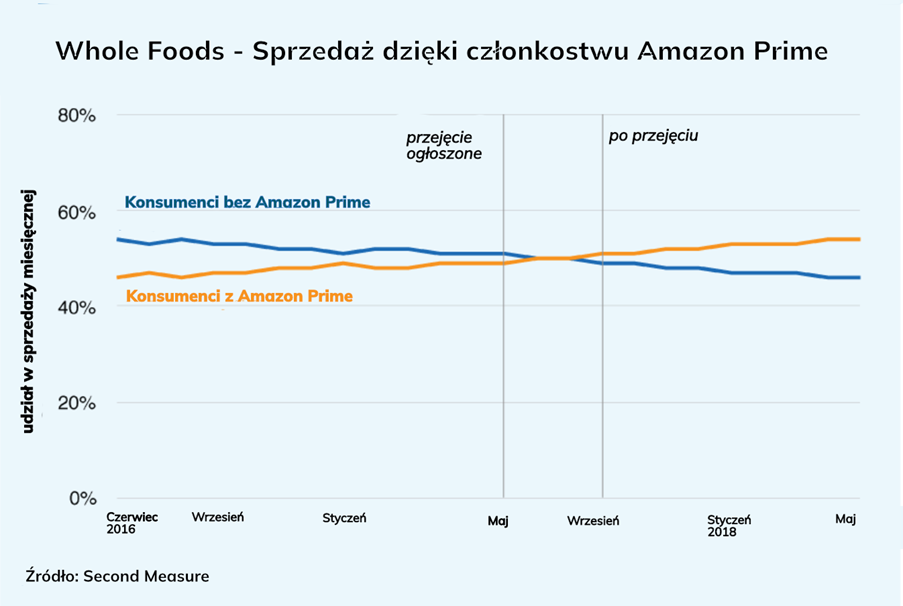
The combination of Amazon and Whole Foods Market has delivered clearly positive results for both companies. Digital technologies have increased sales and improved logistics and customer service, contributing to the further growth of both businesses.
III. Conclusions and outlook
A careful analysis of the impact of mergers and acquisitions on companies’ digital transformation leads to several conclusions.
First, mergers and acquisitions are increasingly used as a tool to drive companies’ digital transformation. Many companies take this route to strengthen their digital capabilities or enter new markets. Deals such as Microsoft–LinkedIn and Facebook–Instagram show that M&A is an effective way to build digital capabilities and become more competitive.
Second, mergers and acquisitions can affect a company’s digital transformation in different ways, depending on the nature of the deal. Amazon’s acquisition of Whole Foods Market is a good example: Amazon used the potential of the acquired company to strengthen its presence in the grocery sector and develop new distribution channels, including through digital solutions.
Mergers and acquisitions will also play an increasingly important role in digital transformation in the future. Companies that can adapt to new trends and seize the opportunities digital transformation offers will gain a market advantage. One example could be an acquisition of TikTok by Microsoft, which would give the company new opportunities in the social media market.
Finally, it is useful to consider which companies may become M&A targets in the near future and what impact this could have on digital transformation. One example could be Salesforce’s acquisition of Slack, which would allow Salesforce to strengthen its position in cloud communication tools.
These conclusions show that mergers and acquisitions are an increasingly sought-after tool for driving companies’ digital transformation, and their importance will only grow in the future.
IV. Summary
This article has examined the impact of mergers and acquisitions on companies’ digital transformation. Based on a literature review and a case study of Amazon’s acquisition of Whole Foods Market, it has shown that M&A can be an effective tool for driving digital transformation. We also mentioned other deals, including Microsoft’s acquisition of LinkedIn and Facebook’s acquisition of Instagram, which had a positive effect on the development of these platforms.
The analysis of Amazon’s acquisition of Whole Foods Market showed that Amazon used its experience and expertise in e-commerce and digital services to improve how Whole Foods Market operates. Thanks to investments in IT systems and the development of the Prime Now platform, Amazon significantly improved logistics and increased product availability.
The findings point to the important role of mergers and acquisitions in companies’ digital transformation, particularly in retail and e-commerce. The outlook in this area is promising, and further mergers and acquisitions may shape the continued growth of the digital sector.
In summary, mergers and acquisitions are an important tool for driving companies’ digital transformation. Amazon’s acquisition of Whole Foods Market shows that investing in digital development can improve a company’s performance and competitiveness. Further research in this area is warranted to better understand how mergers and acquisitions influence companies’ digital transformation.
V. References
Acquisitions Daily. (2020). How Amazon used the Whole Foods acquisition to transform grocery shopping. Acquisitions Daily.
Brynjolfsson, E., & McAfee, A. (2014). The second machine age: Work, progress, and prosperity in a time of brilliant technologies. WW Norton & Company.
Capgemini Research Institute. (2019). The digital supply chain’s missing link: focus. Capgemini Research Institute.
Chui, M., Manyika, J., & Miremadi, M. (2015). Four fundamentals of workplace automation. McKinsey Quarterly,
Davenport, T. H. (2014). Big data at work: Dispelling the myths, uncovering the opportunities. Harvard Business Review Press.
Harvard Business Review. (2017). Why Amazon bought Whole Foods. Harvard Business Review.
KPMG. (2018). M&A Predictor. KPMG.
Microsoft News Center. (2016). Microsoft to acquire LinkedIn. Microsoft News Center.
PwC. (2018). Industry 4.0: Building the digital enterprise. PwC.
Statista. (2021). Number of Facebook employees from 2004 to 2020. Statista.
TechCrunch. (2012). Facebook acquires Instagram for $1 billion. TechCrunch.



